

How long does a dental implant last? For many people, dental implants stay in place for well over a decade, and some last much longer. How long yours lasts depends on the implant, the crown attached to it, and how healthy the gum and bone around it stay over the years.
At Dental 266, we explain your options and the costs involved before any treatment begins, including the factors that may affect how long an implant lasts for you.
Quick Overview
- A dental implant is a small titanium post that replaces a missing tooth root and holds an artificial tooth, but the post and the crown on top can wear at different rates.
- Long-term studies suggest most implants are still in place after 10 years, though the picture changes as the years go on.
- Implants may suit many people with missing teeth, while gum health, bone quality and some medical conditions can affect whether they are the right choice.
- Smoking, teeth grinding and day-to-day oral hygiene are some of the factors that can influence how long an implant lasts.
- An assessment of your mouth, jaw bone and general health usually guides what is realistic in your case.
Below, we explain what the research shows, what can shorten an implant’s life, and how to look after one.
How Long Do Dental Implants Last? The Short Answer
The short answer is that most dental implants are still working 10 years after they are placed, and many last longer. Research that followed implants for 20 years suggests about four in five were still in place. The crown attached to the implant often needs repair or replacement sooner. Individual outcomes vary.
There is no fixed average lifespan that applies to everyone. An implant is not affected by tooth decay the way natural teeth are, but the gum and bone that hold it can still become unhealthy. When that happens, the implant can loosen over time.
The Implant Post and the Crown: Two Parts, Different Lifespans
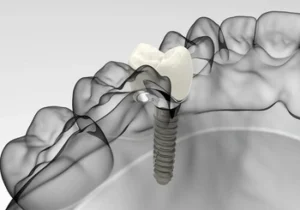
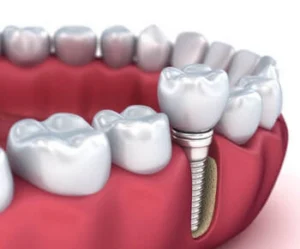 A dental implant has three main parts. The implant post is a titanium screw that sits in the jaw bone and acts as an artificial tooth root. A small connector, called an abutment, sits on top. The dental crown, which is the visible artificial tooth, attaches to the abutment.
After placement, the bone slowly grows against the surface of the titanium post. This is a process called osseointegration, and it is what gives the implant its long-term stability. The healing process usually takes a few months before the final crown is fitted.
The titanium implant post is protected inside the bone, so it tends to last the longest. The crown is exposed to chewing forces every day. Like a crown on a natural tooth, it can chip, wear or loosen, and crown replacement may be needed at some point. Learn more about dental crowns and bridges.
What Does the Research Say About Dental Implant Longevity?
A 2019 review of long-term studies found that about 96% of implants were still in place after 10 years. When the researchers allowed for patients who stopped attending follow-up visits, the estimate dropped to about 93%. People aged 65 and over had slightly lower survival in that adjusted analysis.
Fewer studies have followed implants for longer. A 2024 analysis of 20-year data estimated that around four in five implants were still working after two decades. The authors noted that implant failure usually has more than one cause, and that regular follow-up care should continue for life, not stop after the first 10 years. The same analysis found that studies comparing implants placed with and without bone grafting did not show a clear difference in survival.
Survival is not the same as being problem-free. Even when an implant stays in place, smaller issues such as a loose screw or a chipped crown are common over the years, and many can be repaired.
These figures are group averages. They cannot predict how long a single implant will last.
What Affects How Long a Dental Implant Lasts?
Research has identified these as some of the most significant risk factors for implant longevity.
- Gum health and oral hygiene. Plaque that builds up around the implant can cause a gum infection called peri-implantitis, which can lead to bone loss around the implant. Research indicates it is one of the more common long-term problems with implants, and a history of gum disease, diabetes and smoking are all linked to a higher risk. Poor oral hygiene makes this more likely. If you have signs of gum problems, gum disease treatment before and after implant placement may help.
- Smoking. Smoking reduces blood flow to the gums and bone, which can slow the healing process and weaken the tissue surrounding the implant. A large review of more than 150,000 implants found that implants in people who smoke had about 2.4 times the odds of failing compared with implants in non-smokers.
- Medical conditions. Uncontrolled diabetes can slow healing and increase the risk of infection. Research on people with type 2 diabetes suggests that outcomes for those with well-controlled blood sugar are often similar to people without diabetes, while poorly controlled diabetes is linked to more bone loss and inflammation around the implant. Tell your dentist about your full medical history and medicines.
- Teeth grinding. Grinding or clenching puts heavy, repeated force on the implant and crown. Research has linked grinding with a higher risk of implant failure and with mechanical problems such as broken screws and chipped crowns. A night guard may help protect implants and other teeth. You can read about worn teeth treatment if grinding has already affected your teeth.
- Bone quality and bone density. After a tooth is lost, the jaw bone in that area can shrink over time. Bone in the upper jaw is also naturally softer than in the lower jaw. Where there is significant bone loss, bone grafting may be used to build a more solid foundation at the implant site.
- Implant placement and planning. The position, angle and number of implants, and how your bite loads them, all affect how forces spread through the implant. Even with a skilled dentist and careful planning, some implants do not integrate or may fail years later.
- Ongoing check-ups. Early bone loss around an implant often causes no pain. Regular dental check-ups allow it to be picked up and managed while it is still small.
Signs an Implant May Need Attention
A failed implant does not always happen suddenly. Signs that something may be changing around the implant include:
- bleeding, redness or swelling at the gum line around the implant
- the implant feels loose, or the crown moves when you bite
- pain or discomfort when chewing
- gums pulling back so that metal becomes visible
- a bad taste or discharge near the implant
A loose crown is sometimes caused by a loose screw rather than a problem with the implant itself, but only an examination and X-ray can tell. If you notice any of these signs, contact your dentist rather than waiting for your next routine visit.
How to Care for Your Dental Implants
Implants cannot get tooth decay, but they can still be affected by gum disease, so they need the same care as natural teeth. Good oral hygiene and proper care at home may help protect your implant.
- Brush twice a day with a soft toothbrush, paying attention to where the crown meets the gum.
- Clean between your teeth and around the implant each day with floss, interdental brushes or a water flosser, as your dentist recommends.
- Keep up regular dental check-ups and professional cleans so any early changes can be found.
- If you smoke, speak with your dentist about support to quit.
- Wear a night guard if your dentist recommends one for grinding.
Our preventative dentistry page explains how routine care supports long-term oral health.
How Implants Compare With Other Tooth Replacement Options
Dental implants are one of several tooth replacement options, alongside dental bridges and dentures. Each has its own trade-offs.
A bridge is usually supported by the neighbouring teeth, which may need to be reshaped to hold it. This places extra demands on adjacent healthy teeth. Dentures and overdentures are removable and can replace one tooth or many, although they may need adjusting over time as the gums and bone change shape.
An implant does not rely on other teeth for support. It does involve implant surgery, a longer treatment time and higher upfront costs. The right option depends on your bone health, your other teeth, your budget and your preferences.
A Considered Approach to Dental Implants
 How long a dental implant lasts depends on your gum and bone health, your general health, your habits and the care the implant receives. Most implants are still working a decade after placement, but individual outcomes vary.
Every mouth is different, so the clearest way to understand what is realistic for you is an assessment of your gums, jaw bone and general health. If you’d like to find out whether an implant may be suitable for you, or you have an existing implant you would like checked, we welcome you to call Dental 266, and our friendly team will guide you through your options
Call Dental 266 on 02 9051 0600. You can also contact us online.
Frequently Asked Questions
How long does a dental implant last on average?
Long-term studies suggest that around 93% to 96% of implants are still in place after 10 years. Data over 20 years is more limited, but suggests about four in five implants are still working. How long an individual implant lasts depends on gum health, bone quality, general health and habits like smoking.
Can a dental implant last for decades?
Some implants stay in place for decades, but no one can promise how long a particular implant will last. The titanium post can remain stable for a long time if the gum and bone around it stay healthy. The crown on top usually needs repair or replacement at some stage.
What are the signs of a failed dental implant?
Common signs include an implant that feels loose, bleeding or swelling around the gum line, pain when biting, and gums pulling back to expose metal. Some problems, such as early bone loss, cause no symptoms at all. That is why regular check-ups and X-rays are useful.
Does the crown on a dental implant need to be replaced?
Often, yes. The crown is exposed to daily chewing forces, so it can chip, wear or loosen over time, much like a crown on a natural tooth. Replacing the crown does not usually mean replacing the implant post underneath.
Does smoking affect how long dental implants last?
Yes. Smoking reduces blood flow to the gums and bone, which can slow healing after implant surgery and raise the risk of infection around the implant. Research has found that implants in people who smoke have higher odds of failing than implants in non-smokers. Cutting back or quitting may lower this risk.
Note: Any surgical or invasive procedure carries risks. Before proceeding, you should seek a second opinion from an appropriately qualified health practitioner.
References
- Howe MS, Keys W, Richards D. Long-term (10-year) dental implant survival: a systematic review and sensitivity meta-analysis. Journal of Dentistry. 2019;84:9-21. doi:10.1016/j.jdent.2019.03.008. Available at: pubmed.ncbi.nlm.nih.gov/30904559
- Kupka JR, König J, Al-Nawas B, Sagheb K, Schiegnitz E. How far can we go? A 20-year meta-analysis of dental implant survival rates. Clinical Oral Investigations. 2024;28(10):541. doi:10.1007/s00784-024-05929-3. Available at: pmc.ncbi.nlm.nih.gov/articles/PMC11416373
- Mustapha AD, Salame Z, Chrcanovic BR. Smoking and dental implants: a systematic review and meta-analysis. Medicina (Kaunas). 2021;58(1):39. doi:10.3390/medicina58010039. Available at: pmc.ncbi.nlm.nih.gov/articles/PMC8780868
- Australian Dental Association. Dental implants. Teeth.org.au. Available at: teeth.org.au/dental-implants