
Losing a molar is not the same as losing a front tooth. Molars carry most of the load when you chew, and a gap at the back of the mouth can affect how you eat, how your remaining teeth sit, and what happens to the jawbone underneath over time. For many people, a dental implant molar is worth understanding before making any decisions about tooth replacement.
The process involves more steps than a standard filling or crown, and for upper molars in particular, there may be additional considerations specific to that part of the jaw. Understanding what dental implant treatment involves from assessment to recovery helps you have a more informed conversation with your dentist about whether it may suit your situation.
Quick Overview
- A dental implant molar is a tooth replacement option that uses a titanium post placed into the jawbone, topped with a custom-made crown
- It may be suitable for people with one or more missing molars, though individual health factors, bone density, and gum condition all affect eligibility
- The process typically involves multiple stages spread across several months, and may include additional procedures such as bone grafting or a sinus lift for upper molars
- How well the implant integrates depends on factors including oral hygiene, general health, bite forces, and whether bone volume is adequate at the implant site
- A dental assessment with X-rays and a review of your medical history guides whether an implant is appropriate and what treatment plan would apply to your situation
Keep reading to understand how molar implants work, what affects the process, and what ongoing care involves.
What Is a Dental Implant Molar?
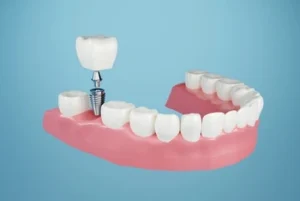
A dental implant molar replaces a missing molar tooth using a titanium post inserted into the jawbone, which then acts as an artificial tooth root. Once the bone has grown around and integrated with the post, a custom-made crown is attached to the top to restore the appearance and function of the missing tooth.
Molars are the largest teeth in the mouth and bear the heaviest chewing forces. Because of this, the post must be firmly anchored within the jaw, and the crown must be designed to withstand the biting and grinding pressures typical of back teeth. This makes the assessment phase particularly important for molar replacements.
Unlike a dental bridge, an implant does not require the neighbouring teeth to be prepared or altered. The implant stands independently within the jaw, which preserves the structure of the surrounding teeth.
Why Do Molars Often Need Additional Assessment?
 Molars sit at the back of the jaw where bone density and volume can vary significantly, particularly if the tooth has been missing for some time.
When a tooth is lost, the jawbone in that area no longer receives stimulation from chewing. Over time, the bone can begin to shrink. The longer a molar has been missing, the more bone loss may have occurred, which can affect whether an implant can be placed without additional procedures first.
For upper molars, the proximity to the maxillary sinuses (the air-filled spaces above the upper jaw) can further complicate placement. If there is not enough bone height between the jaw and the sinus floor, a sinus lift may be needed before or alongside implant surgery.
What Is Involved in the Implant Procedure?
A dental implant molar procedure typically takes place across several appointments over a period of months. The exact timeline depends on your individual situation, including whether additional preparatory steps are required.
Assessment and treatment planning: The process begins with a dental exam, X-rays, and in many cases a cone beam CT scan to assess bone volume and the position of nearby structures. Your medical history is reviewed, as certain conditions and medications can affect healing and implant outcomes. A treatment plan is developed based on these findings.
Bone grafting or sinus lift (if needed): If bone volume is insufficient, minor bone grafting may be recommended to build up the implant site. For upper molars, a sinus lift creates the bone height needed for secure implant placement. Both procedures require a healing period before the implant post can be placed.
Implant placement: The titanium post is placed into the jawbone under local anaesthetic in a minor surgical procedure. Some patients are suitable for immediate implant placement at the time of extraction; others require a separate procedure after healing.
Osseointegration: Over approximately three months, the bone grows around and fuses with the implant post. This process, called osseointegration, is what gives the implant its stable foundation. Routine check-ups allow the dentist to monitor progress during this period.
Crown placement: Once the implant has integrated and the area has healed, the custom-made crown is attached. The crown is shaped and coloured to match the surrounding teeth and to handle the bite forces of the molar region.
What Factors Affect Suitability and Outcomes?
Not everyone is a candidate for a dental implant molar, and individual factors play a significant role in whether the procedure is suitable and how it progresses.
Gum health is one of the most important considerations. Active gum disease affects bone loss and needs to be addressed before an implant is placed. Unmanaged gum disease at an implant site can increase the risk of complications.
Other factors that influence suitability and outcomes include:
- Bone volume and density at the implant site
- General health and medical history, including conditions such as uncontrolled diabetes
- Smoking, which is associated with slower healing and higher rates of implant complications
- Oral hygiene habits and commitment to ongoing care
- Whether additional procedures such as bone grafting are required
Your dentist will explain how these factors apply to your situation and what treatment approach would be recommended.
How Do Molar Implants Compare to Other Options?
Missing molars can also be replaced with a dental bridge or a partial denture. Each approach has different considerations in terms of structure, longevity, and ongoing maintenance.
An implant preserves the jawbone beneath by stimulating it in the way a natural tooth root does. This can help reduce bone loss over time. A bridge, by contrast, requires the adjacent teeth to be prepared and does not address the bone beneath the gap. A partial denture is removable and generally requires more daily management.
The right option depends on the number of missing teeth, the condition of the surrounding teeth, bone volume, and personal preference. Your dentist can outline the advantages and trade-offs of each approach based on your specific situation.
Caring for a Molar Implant Long-Term
A molar implant requires the same level of daily care as natural teeth, with a few additions specific to the implant site.
Brushing twice daily and cleaning between the teeth using floss, interdental brushes, or a water flosser helps prevent plaque buildup around the implant crown and the gum tissue surrounding it. Regular dental check-ups and cleans allow the dentist to monitor the implant, the crown, and the health of the surrounding gum and bone.
Certain habits can increase the risk of implant complications over time. These include grinding or clenching the teeth, which places excessive pressure on the crown, and smoking, which affects healing and long-term tissue health. If you grind your teeth, a night guard may be recommended to protect the implant.
Long-term data suggests that implants remain stable for decades, though implant-supported crowns may need replacement over time due to normal wear. Individual results depend on the care taken and the factors specific to each patient.
A Considered Approach to Molar Replacement
A missing molar is worth addressing, even if it is not immediately visible. The effect on chewing, the load placed on remaining teeth, and the long-term impact on bone health are all reasons to understand your options early.
At Dental 266 in Burwood, the team takes the time to explain treatment options clearly, including the costs and what each stage involves, so you can make informed decisions at your own pace. Dental implants are one of several options for replacing a missing molar, and the right approach depends on your individual assessment.
To arrange a consultation, call 02 9051 0600, or book an appointment online.
Note: Any surgical or invasive procedure carries risks. Before proceeding, you should seek a second opinion from an appropriately qualified health practitioner.
Frequently Asked Questions
Do molar implants require bone grafting?
Not always, but it is more common with molar implants than with front teeth, particularly if the molar has been missing for some time and bone loss has occurred. Upper molar implants may also require a sinus lift if there is not enough bone height below the sinus. Your dentist will assess bone volume using X-rays or a CT scan and advise whether any preparatory procedures are needed.
How long does the full molar implant process take?
The timeline varies depending on whether additional procedures are needed. A straightforward case without bone grafting typically takes three to six months from implant placement to final crown fitting. If bone grafting or a sinus lift is required, the process may extend to nine months or more. Your dentist will outline an estimated timeline based on your treatment plan.
References
Healthdirect Australia. (2025). ‘Dental implant procedure’. Healthdirect Australia, February. Sydney, NSW: Healthdirect Australia. https://www.healthdirect.gov.au/dental-implant
Australian Dental Association. (n.d.). ‘Dental implants’. Teeth.org.au. Sydney, NSW: Australian Dental Association. https://www.teeth.org.au/dental-implants
Better Health Channel, Victoria. (n.d.). ‘Gum disease’. Better Health Channel. Melbourne, VIC: Department of Health, Victoria. https://www.betterhealth.vic.gov.au/health/conditionsandtreatments/gum-disease
Australian Dental Association. (2023). ‘Swedish study examines the longevity of single-tooth implant treatments’. Australian Dental Association. Sydney, NSW: ADA. https://ada.org.au/swedish-study-examines-the-longevity-of-single-tooth-implant-treatments