

A damaged or weakened tooth can influence both your smile and comfort, but it can be restored with a dental crown. Front tooth crowns not only strengthen the tooth but also enhance its appearance for a natural, seamless look. Let’s take a closer look at how this treatment works, what to expect during the dental crown procedure, and how to maintain your new smile for the long term.
Understanding the Purpose of a Dental Crown
A dental crown, also known as a tooth crown, is a customised cap that covers the entire tooth. It restores the shape, size, and strength of a damaged or weakened tooth while enhancing its overall appearance. Dental crowns are commonly used on both back teeth and front teeth, but when it comes to the front of your smile, appearance plays a major role.
Crowns for front teeth are crafted to mimic the colour and shape of your natural teeth. They cover the visible part of the tooth above the gum line, helping protect it, restore its function, and preserve a natural appearance.
When Do You Need a Crown on a Front Tooth?
There are multiple situations where your dentist might recommend a dental crown for a front tooth, including:
- Weakened or decayed teeth: If a significant portion of the tooth structure is damaged by decay, placing a crown can help reinforce and protect it from further deterioration.
- After root canal treatment: In a root canal procedure, the infected pulp tissue within the tooth is cleared out, which may leave the tooth structure more fragile. Placing a crown afterwards helps strengthen and safeguard the treated tooth.
- Cracked or chipped teeth: Front teeth are prone to damage from accidents or biting hard objects. A crown restores the tooth’s shape and strength.
- Discoloured teeth: Deep stains that cannot be corrected with whitening may be concealed using tooth crowns for a more even colour.
- Cosmetic enhancement: A crown can improve the shape, alignment, and appearance of uneven or misshapen teeth.
Step-by-Step: What Happens During a Dental Crown Procedure
The dental crown procedure typically involves several stages. Each step plays a distinctive role in ensuring your new crown fits comfortably and looks natural.
1. Examination and Preparation
Your dentist will begin by assessing your front teeth to decide if a crown is the right treatment option. X-rays are often taken to evaluate the condition of the tooth underneath and the surrounding teeth. If decay or damage is detected, the affected areas are carefully removed. In most cases, a small amount of natural enamel is also trimmed to create adequate space for the crown to fit securely.
In cases where there is not enough tooth structure left to support a crown, filling material may be used to build up the tooth so the crown can sit securely.
2. Taking Impressions
Once the tooth is shaped, an impression is taken. This impression acts as a guide for creating a crown that matches the size, shape, and colour of your natural teeth. Many patients now benefit from digital scanning, which provides precise measurements and can be more comfortable than traditional moulds.
3. Fitting the Temporary Crown
As your permanent crown is being fabricated, your dentist will place a temporary crown to shield the prepared tooth. This helps preserve its shape, function, and appearance until the final crown is ready. This temporary crown helps maintain function and appearance, but is not as durable as the final one. It’s important to avoid sticky or hard foods during this stage to prevent the temporary crown from becoming loose.
4. Placement of the Permanent Crown
When your permanent crown has been completed, your dentist removes the temporary one and checks the fit and colour of the new crown. Adjustments are made if necessary before it’s permanently secured using dental cement.
This stage completes the dental crown procedure. Once the crown is placed, you’ll be able to use your tooth normally again.
Exploring the Different Types of Crowns
Choosing the right material for front teeth crowns depends on your dental goals, the condition of your natural tooth structure, and your budget. Each type of crown has unique benefits.
Porcelain Crowns
Porcelain crowns are one of the most popular choices for front teeth. They replicate the light-reflecting qualities and shade of natural enamel, resulting in a realistic and lifelike appearance. These crowns are ideal for front teeth as they blend seamlessly with adjacent teeth.
Ceramic Crowns
Ceramic crowns offer excellent aesthetics and durability. They are metal-free, making them suitable for patients with metal sensitivities and for achieving a natural look on visible teeth.
Zirconia Crowns
Zirconia crowns provide exceptional durability and wear resistance, making them ideal for restoring both front and back teeth. They deliver a strong yet natural-looking result that blends seamlessly with surrounding teeth. Although they may have a higher cost, they offer long-lasting performance.
Porcelain Fused to Metal
Porcelain-fused-to-metal crowns have a metal base for strength and a porcelain layer for a tooth-coloured finish. They’re durable but may show a slight dark line near the gum over time, which makes them more common for back teeth.
Composite Resin
Composite resin crowns are a cost-effective option that can achieve a pleasing appearance. However, they are generally less durable than porcelain or zirconia crowns, particularly on front teeth that handle greater biting forces.
Caring for Your New Dental Crown
Once your new crown is in place, proper care ensures it lasts for many years. Maintaining good oral hygiene and regular dental visits play a crucial role in keeping your crowns and surrounding teeth healthy.
Here are a few helpful tips: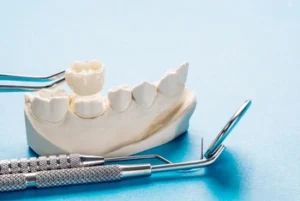
- Regular brushing: Brush twice a day using fluoride toothpaste to remove plaque and protect the tooth underneath the crown.
- Floss daily: Clean carefully between your teeth and around the crown to reduce the likelihood of gum irritation and decay forming near the crown edges.
- Avoid biting hard objects: Chewing on ice or using your teeth to tear or open items can harm both your crowns and your natural teeth.
- Monitor your bite: If your crown feels loose or uncomfortable, visit your dentist to have it adjusted.
- Routine check-ups: Professional cleanings help detect any issues early and extend the life of your crown.
Possible Sensitivity and Adjustments
Some patients experience short-term sensitivity after getting a crown. This usually occurs because the tooth enamel has been reshaped, and the surrounding gums are adjusting to the new restoration. Sensitivity should ease within a few days.
If discomfort persists or the crown feels uneven when biting, your dentist can make minor adjustments to ensure proper alignment.
What If the Tooth Needs a Dental Implant?
If the tooth is extensively damaged or beyond repair, your dentist might suggest a dental implant as an alternative to a crown. The implant serves as an artificial root, supporting a new crown that looks and functions like a natural tooth. This approach provides stability and prevents bone loss in the jaw.
Managing the Cost of Front Teeth Crowns
The cost of front teeth crowns can vary based on the material chosen and the complexity of the dental crown procedure. Ceramic and zirconia crowns often have a higher cost than composite resin options due to their durability and appearance.
Many patients use private health insurance to cover part of the expense. Annual limits and item numbers vary, so it’s best to check your policy beforehand. Some clinics also offer payment plans, allowing you to spread the cost over time while receiving the care you need.
How Long Do Crowns Last?
With proper oral hygiene and regular check-ups, crowns can last anywhere between 10 and 15 years or longer. The lifespan may vary depending on the material used, your oral care habits, and how well you protect your natural teeth.
Final Thoughts: Restoring Your Smile with Comfort and Strength
 Getting a dental crown for a front tooth treatment can enhance your smile and restore your comfort and oral function. Whether you’re addressing a weakened tooth, covering discoloured teeth, or protecting a tooth after a root canal, a crown provides both beauty and strength.
Visit your dentist for a professional consultation to discuss the most suitable types of crowns for your needs. With the right care and guidance, your front teeth crowns can offer a long-lasting, natural look that blends seamlessly with your smile.
For professional and personalised care, book a consultation with Dental 266 today at 02 9051 0600 to restore your smile with a natural-looking crown.
Note: Any surgical or invasive procedure carries risks. Before proceeding, you should seek a second opinion from an appropriately qualified health practitioner.
References
Colgate. (n.d.). Dental impressions: What to expect. Retrieved from https://www.colgate.com/en-us/oral-health/bridges-and-crowns/dental-impressions-what-to-expect
Cleveland Clinic. (n.d.). Root canal. Retrieved from https://my.clevelandclinic.org/health/treatments/21759-root-canal
Medical News Today. (n.d.). Temporary crown. Retrieved from https://www.medicalnewstoday.com/articles/temporary-crown
WebMD. (n.d.). Dental crowns. Retrieved from https://www.webmd.com/oral-health/dental-crowns