
When one or more teeth are lost, everyday functions can change. Chewing may feel uneven. Speech can sound different. A visible gap may also affect how a person feels about their smile.
Missing teeth do more than create space. When a tooth is lost, a dental implant is one option that may be discussed to replace it. Each natural tooth has a root that sits in the jawbone. These roots help stimulate the surrounding bone when you bite and chew. Without that stimulation, the bone in the jaw may gradually reduce in volume.
This change can influence overall oral health. It may also affect the shape of the lower face and facial structure over time. The effect is often more noticeable when front teeth are involved, as they play a visible role in appearance.
The goal of replacing missing teeth is not only to fill a gap. It is also to support the remaining natural teeth, maintain bone support, and help protect the balance of the bite.
What Is A Front Tooth Implant?
A front tooth implant is a type of dental implant used to replace a single missing tooth in the front of the mouth. More broadly, dental implants are designed to replace lost teeth by supporting a new artificial structure within the bone.
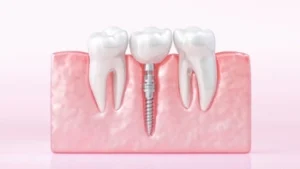 Each implant acts as a substitute for a natural root. Once placed, it supports a restoration that functions like a new tooth. In this way, a dental implant can help restore both function and appearance.
When used for a single tooth, especially in the front teeth, careful planning is required. The front area is highly visible, so the shape and position of the final crown must blend with the surrounding natural teeth.
An artificial tooth restoration attached to the implant is shaped to suit the smile line. In cases involving multiple teeth, implants may be positioned differently, but the principles remain consistent.
A tooth implant in the front region focuses on alignment, gum contour, and colour matching. While the concept of an implant is the same throughout the mouth, the aesthetic demands are greater in this area.
The Dental Implant Process Step By Step
The dental implant process begins with a comprehensive consultation. During this visit, the dentist examines the mouth, reviews medical history, and discusses suitable treatment options.
Planning involves detailed imaging, including X-rays, to assess the bone density and structure. A clear treatment plan is then developed. In some cases, this becomes a personalised treatment plan tailored to the position of the front teeth and surrounding gum shape.
The next stage is the implant procedure. During dental implant surgery, a small opening is made in the gum. A small incision allows access to the bone for implant placement. This stage is carried out under local anaesthesia.
The overall procedure may vary depending on the site and bone support. In certain situations, a temporary restoration can be placed on the same day, although this depends on stability and planning. The dentist will explain how this fits within the wider treatment.
After placement, the healing process begins. The bone gradually integrates with the implant, providing stability. The length of this phase depends on bone quality and overall oral health.
Throughout the stages, the word surgery refers only to the controlled placement of the implant. Each step of the dental implant procedure is structured to support long-term stability.
Bone Support And Grafting Considerations
Adequate bone density is essential for secure implant placement. After a tooth is lost, the surrounding bone may gradually change in volume. Before proceeding, the dentist assesses the quality and thickness of the bone to determine whether it can support the implant safely.
If the available bone is limited, bone grafting may be discussed as part of the treatment. A graft is used to reinforce or rebuild the area so the implant can be positioned with appropriate stability. This is assessed carefully during planning rather than decided during the procedure itself.
In the front region, bone shape is particularly important. Thin bone can influence how the final crown sits and how the gums frame the tooth. Even small variations in contour can affect the overall balance of the front teeth.
The condition of the gum tissue and surrounding gums also contributes to long-term stability. Healthy soft tissue supports healing and helps create a smooth transition between the implant and the visible restoration.
By addressing both bone support and gum contour before placement, the dental implant process can proceed with a stronger structural foundation and a more predictable aesthetic outcome.
Restoring The Tooth With A Crown
Once integration is complete, attention shifts to the visible part of the tooth. A temporary crown may be used during healing to maintain the shape and alignment of the front teeth.
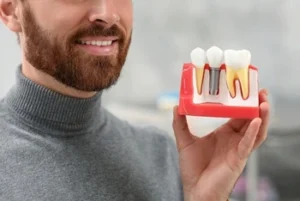 The final stage involves attaching a custom-made crown. This becomes the visible part of the new tooth. The shade and shape are matched to nearby existing teeth.
A permanent crown is then secured to the implant. In situations involving several adjacent gaps, an implant-supported bridge may be considered. This approach uses fewer implants to support multiple teeth.
The crown in the front area is carefully contoured so it sits naturally against the gums. The result supports speech, chewing, and facial balance without affecting neighbouring teeth.
Comparing Treatment Options
When considering treatment options for replacing missing teeth, it is helpful to understand how different approaches interact with adjacent teeth.
Dental bridges depend on the adjacent teeth to hold them securely in place. This may involve the preparation of those teeth. In contrast, a tooth implant is placed within the bone and does not depend on surrounding structures.
Removable dentures are another option. These sit on the gums and can replace one or more missing teeth, but they do not stimulate the bone in the same way an implant does.
For some patients, an implant-supported solution provides stability while preserving neighbouring structures. The most suitable treatment depends on bone support, location, and overall oral health.
Long-Term Maintenance And Outcomes
A front tooth implant is often considered a long-term solution for tooth loss. However, longevity depends on consistent proper care.
Daily cleaning, attention to the gums, and regular reviews with a dentist help maintain stability. Good oral health supports the surrounding tissues and helps protect both the implant and nearby teeth.
An implant can provide a long-lasting solution when integrated well with the bone. Its role in supporting the smile extends beyond appearance to overall function.
As with any dental treatment, understanding the process allows patients to make an informed decision. By considering structure, healing, and maintenance, people can select an option that suits their situation and personal priorities.
Final Thoughts
 Replacing a front tooth involves more than filling a visible space. It requires careful planning to support bone health, gum shape, and long-term function. When each stage is considered thoughtfully, the final result can blend naturally with the surrounding teeth.
Understanding the process, from consultation through to the final crown, helps patients feel more informed about their options. Ongoing care and regular reviews also play an important role in maintaining stability over time.
If you are concerned about a missing front tooth or would like personalised guidance about suitable treatment options, you can book a consultation with us at Dental 266 or call 02 9051 0600. A dentist can assess your situation and explain the next steps in a clear and considered way.
Note: Any surgical or invasive procedure carries risks. Before proceeding, you should seek a second opinion from an appropriately qualified health practitioner.
Resources
Cherney, K., & McLean, A. (2025). ‘10 Ways to Keep Your Teeth Healthy’. Healthline, 13 May. San Francisco, CA: Healthline Media. https://www.healthline.com/health/dental-and-oral-health/best-practices-for-healthy-teeth
Cleveland Clinic (2024). ‘Dental Bone Graft’. Cleveland Clinic, 6 August. Cleveland, OH: Cleveland Clinic. https://my.clevelandclinic.org/health/treatments/21727-dental-bone-graft
Mayo Clinic Staff (2024). ‘Dental Implant Surgery’. Mayo Clinic, 23 October. Rochester, MN: Mayo Foundation for Medical Education and Research. https://www.mayoclinic.org/tests-procedures/dental-implant-surgery/about/pac-20384622