

When a tooth is badly damaged or infected, the two options most often discussed are root canal therapy and dental implants. Both aim to restore chewing function, but they work in different ways. At Dental 266, we explain your options and the costs involved clearly before any treatment begins, so you can decide what feels right for you.
Quick Overview
- In the root canal vs implant decision, a root canal aims to keep your natural tooth, while an implant replaces a tooth that has been removed.
- Saving the tooth is often the first option explored, but it is not possible in every case.
- Both treatments can offer good long-term outcomes, though the process, healing time and cost can differ.
- How much healthy tooth structure remains, the condition of your jawbone and your general health can all influence which path may suit you.
- An examination with X-rays is usually what guides the next step.
Below, we explain how each treatment works, what the research shows and what can affect your decision.
Root Canal vs Implant: What Is the Difference?
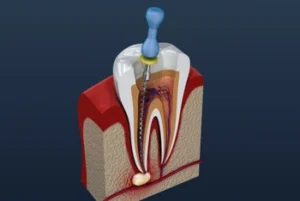 A root canal keeps your original tooth. An implant replaces it.
Inside every tooth is soft tissue called the pulp, which holds nerves and blood vessels. Deep decay, a crack or repeated dental procedures on the same tooth can lead to inflamed or infected pulp. During root canal therapy, the dentist removes the infected tissue, cleans and shapes the canals, then fills and seals them. The treatment aims to clean, disinfect and seal the inside of the tooth so it can stay in your mouth.
A dental implant is used when a tooth cannot be saved or has already been lost. After a tooth extraction, the dentist anchors a small titanium post in the jawbone, where the natural tooth root used to sit. Over about three months, the bone grows around the implant, and an artificial tooth, usually a crown, is then attached.
When Might Root Canal Treatment Be Suitable?
Root canal treatment may be suitable when the tooth still has enough healthy structure, and the surrounding bone is in reasonable condition. Many patients first notice a severe toothache, lingering sensitivity to hot or cold, or tenderness when biting. Some infections cause no symptoms at all and are only found on an X-ray.
The procedure is done under local anaesthetic and usually takes one to three appointments. Afterwards, crowns are commonly recommended for root canal-treated teeth, especially back teeth, because a treated tooth can become more brittle. Your dentist may suggest a dental crown to help protect it.
Keeping your natural tooth has practical advantages. It helps preserve the bone and soft tissue around it, keeps the familiar feel of biting, and usually involves fewer steps than an implant.
When Might a Dental Implant Be Considered?
 An implant may be considered when a tooth is severely damaged, cracked below the gum line or has too little tooth structure left to rebuild. It can also be an option when a previous root canal has not worked, and retreatment is unlikely to help.
Implants do not rely on the surrounding teeth for support. Once healed, they can restore chewing function with a natural look. Because the post sits in the jaw, an implant may also help with preventing bone loss where a tooth is missing.
The process is more involved. It typically includes the extraction, a healing period, placing the implant and then fitting the crown. Some people need bone grafting first if the jawbone is too thin, so the whole process can take several months. Like any surgical procedure, implants carry risks, such as infection, nerve damage, sinus problems or injury to nearby teeth.
What Affects the Choice Between a Root Canal and an Implant?
Several factors help guide which treatment may suit you:
- How much tooth is left: deep decay below the gum line or a crack into the root can make a tooth hard to save.
- Gum and bone health: gum disease or bone loss around the tooth can affect both options.
- General health: diabetes, osteoporosis and smoking can affect healing after implant surgery.
- Time and visits: a root canal and crown is often completed sooner, while an implant usually involves several months of healing.
- Cost: fees depend on how complex your case is. An implant often costs more upfront, though a root canal that later needs retreatment adds cost too.
- Your preferences: some patients decide they would rather keep their own tooth, while others prefer a different approach once they understand the process.
If you are unsure, it is reasonable to seek a second opinion.
How to Care for a Treated Tooth or an Implant
Whichever option you choose, proper care plays a large part in long-term success: 
- Brush twice a day with fluoride toothpaste and clean between your teeth daily with floss or interdental brushes.
- Avoid chewing hard or sticky foods on a root canal-treated tooth until its crown is fitted.
- Follow your dentist’s instructions after implant surgery, including eating soft foods while the area heals.
- Keep up regular check-ups through preventative dentistry, so your dentist can monitor the tooth or implant and the gums around it.
A treated tooth can still develop decay, and the gum around an implant can still become inflamed, so ongoing care matters for both.
A Considered Approach to Root Canal vs Implant
There is no single answer to the root canal vs implant question. The right choice depends on your tooth, your health and what matters most to you. Our dentists will examine the tooth, take X-rays and talk you through each option, including the likely timeframe and costs.
If you have a damaged or painful tooth and would like to understand your options, you are welcome to call Dental 266 on 02 9051 0600.
Note: Any surgical or invasive procedure carries risks. Before proceeding, you should seek a second opinion from an appropriately qualified health practitioner.
Frequently Asked Questions
Is a root canal better than an implant?
Neither is better for everyone. Saving a natural tooth with a root canal is often explored first when the tooth can be restored. An implant may be more suitable when the tooth is too damaged to save, and your dentist can explain which may suit you after an examination.
Is a root canal or an implant more painful?
Both are carried out under local anaesthetic, which numbs the area during treatment. Some tenderness or swelling afterwards is common and often settles within a few days. Implant surgery usually involves a longer healing period, as the gum and bone need time to recover.
How long does a root canal-treated tooth last compared to an implant?
Research has found similar survival for both at around five years. How long either lasts depends on factors such as the crown, your oral hygiene, gum health and habits like teeth grinding. With proper care, both can last many years, though individual outcomes vary.
Can I get an implant instead of a root canal?
In some cases, yes. You can choose to have a tooth removed and replaced with an implant rather than having root canal treatment. Your dentist will usually talk through the pros and cons of keeping your natural tooth before recommending an extraction.
What happens if a root canal fails?
If infection returns, options may include redoing the root canal, a minor procedure at the tip of the root, or removing the tooth. If the tooth is removed, an implant, bridge or denture may be considered to replace it.
References
- Healthdirect Australia. Root canal treatment. Healthdirect Australia. https://www.healthdirect.gov.au/root-canal-treatment
- Healthdirect Australia. Dental implant procedure. Last reviewed February 2025. Healthdirect Australia. https://www.healthdirect.gov.au/dental-implant
- Australian Dental Association. Crowns, bridges and veneers. Teeth.org.au. https://teeth.org.au/crowns-bridges-and-veneers