

Having a tooth removed raises a question most patients think about quickly: what happens next? For many people, a dental implant after tooth extraction is the option they want to explore. But the timing, the process, and whether it is even possible right away depend on more than most people expect.
This post covers how implants work, what affects the timing of placement, and what the process generally looks like, so you can have a more informed conversation with your dentist about dental implants in Burwood.
Quick Overview
- A dental implant after tooth extraction may be placed immediately, within weeks, or several months later, depending on individual factors.
- Timing is often influenced by bone condition, gum health, whether infection was present, and the location of the extracted tooth.
- The process may involve preparatory steps such as bone grafting before or at the time of implant placement.
- How long the gap between extraction and implant placement affects bone volume, which in turn shapes what treatment options are available.
- A thorough assessment is needed to determine the right approach for your specific situation.
Below, we explain the timing options, what affects candidacy, and what to expect at each stage of the process.
What Are the Timing Options for Implant Placement?
There is no single answer to how soon a dental implant can be placed after extraction. The approach depends on the condition of the extraction site and a number of individual factors. Broadly, there are three timing pathways your dentist may consider.
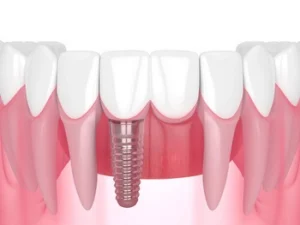 Immediate placement involves placing the implant into the socket at the same appointment as the extraction. This can reduce overall treatment time and may help preserve the shape of the surrounding bone and gum tissue. It works best when the bone around the socket is intact, there is no active infection, and the implant can be seated with enough primary stability to begin healing securely.
Early placement occurs a few weeks after extraction, once the gum tissue has had time to close over the socket and initial soft tissue healing is underway. This approach may be recommended when some gum healing is needed before the implant site is ready, but waiting several months is not necessary.
Delayed placement involves waiting until the extraction site has healed more fully, typically several months after tooth removal. This is often the approach when there has been infection, bone loss, or when bone grafting is carried out first and needs time to integrate before the implant can be placed.
Your dentist will assess the site, your bone volume, gum condition, and overall health to recommend which pathway makes sense for your situation. Peer-reviewed clinical literature on implant timing notes that all three approaches can achieve good outcomes when the right protocol is matched to the right patient.
What Role Does Bone Grafting Play?
Bone grafting is a procedure that adds bone material to the implant site to support or rebuild the volume needed for an implant to integrate successfully. It is more common than many people expect, and it does not automatically mean a longer or more complicated treatment journey.
Grafting may be carried out at the time of extraction to preserve the socket while the site heals. This is sometimes called socket preservation. It can reduce the amount of bone loss that occurs during the healing period, keeping more options open for implant placement later.
In other cases, grafting is done alongside immediate implant placement to fill any gaps between the implant and the socket walls. This helps the bone grow around the implant as healing progresses.
A peer-reviewed study on bone grafting found that implants placed in grafted bone achieved success rates comparable to those placed in patients with adequate native bone. This means that even when the available bone is not ideal at the time of extraction, it is often possible to rebuild a foundation that can support an implant.
At Dental 266 in Burwood, CBCT 3D imaging is used to assess bone quality and volume before any implant procedure is planned, so that the right approach, including whether grafting may be needed, is identified early.
How Does the Overall Implant Process Work After a Tooth Extraction?
The process of getting a dental implant after a tooth extraction typically unfolds across several stages, and the total timeline depends on which placement approach is used and how healing progresses.
 Consultation and assessment are the starting point. Your dentist reviews your medical history, takes X-rays or 3D imaging, and assesses the condition of the extraction site and surrounding teeth. This is where the timing recommendation is made, and the treatment plan is outlined.
Extraction and any preparatory work may be done in the same appointment for immediate placement, or separately if early or delayed placement is the plan. If bone grafting is needed at the time of extraction, this is carried out during the same visit.
Implant placement involves the titanium post being placed into the jawbone at the extraction site. Local anaesthetic is used throughout the procedure. Most patients find the process more manageable than they expected.
Osseointegration is the healing period during which the jawbone grows around the implant, creating a secure anchor. It takes approximately three months for bone to grow around an implant, and this phase determines whether the implant has integrated successfully.
Crown placement is the final step, where the artificial tooth is fitted onto the implant once healing is confirmed. The crown is designed to match the surrounding teeth in shape and colour, completing the restoration.
What Factors Affect the Outcome of an Implant After Extraction?
A number of individual factors can influence how well an implant integrates and holds over time. Some of these relate to health and lifestyle, others to the condition of the extraction site itself.
Bone volume at the time of placement is one of the most significant factors. The implant needs sufficient bone around it to heal into a stable foundation. Where bone volume is limited, grafting may be recommended to address this before or during placement.
Overall health and medical history affect healing. Conditions that influence bone health or immune response, such as poorly controlled diabetes or a history of certain medications affecting bone metabolism, may require additional planning before implant treatment can proceed. Your dentist will discuss any relevant medical factors during the assessment.
Smoking is consistently associated with poorer implant outcomes. People who smoke have a higher risk of complications after oral surgery, including reduced success with dental implants.
Gum health matters both before and after placement. Healthy gums support a clean, stable environment around the implant. Existing gum disease is generally addressed before implant treatment begins, as bacteria in inflamed tissue can compromise the implant site during the healing phase.
Taking the Next Step
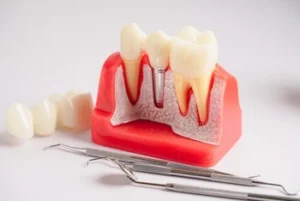 Whether you have already had a tooth removed or are still deciding, understanding your options for a dental implant after tooth extraction is a good starting point. The right timing and approach depend on your individual situation, and a thorough assessment is the only way to know what applies to you.
If you have questions or would like to talk through your options, the team at Dental 266 in Burwood is here to help. There is no obligation to proceed on the day of your consultation. You can book an appointment online or call us on 02 9051 0600.
Any surgical or invasive procedure carries risks. Before proceeding, you should seek a second opinion from an appropriately qualified health professional.
Frequently Asked Questions
Will I need a temporary tooth while waiting for my implant to heal?
This depends on where the extracted tooth was located and your individual treatment plan. For teeth in visible areas, a temporary option such as a removable placeholder may be provided to manage the gap during the healing period. Not everyone requires this, and for back teeth, it is often not necessary for functional reasons. Your dentist will discuss what is appropriate for your situation during the planning stage, taking into account both the location of the tooth and how long the healing period is expected to be.
How do I care for the implant site in the weeks after placement?
In the early weeks after implant placement, keeping the area clean without disturbing the healing tissue is the priority. This typically involves gentle rinsing, avoiding hard or crunchy foods on the side of the implant, not smoking, and using a soft-bristled toothbrush carefully around the surgical site. Attending follow-up appointments as scheduled allows your dentist to check that healing is progressing as expected and address anything that needs attention early. Specific aftercare instructions will be provided at the time of your procedure.
References
Findler, M., Doron, H., Mann, J., Chackartchi, T., and Tobias, G. (2026). ‘Clinical Success Rates of Dental Implants with Bone Grafting in a Large-Scale National Dataset’. Journal of Functional Biomaterials, 15 January. Basel, Switzerland: MDPI. https://pmc.ncbi.nlm.nih.gov/articles/PMC12843187/
Vouros, I.D. (2025). ‘Optimizing Implant Placement Timing and Loading Protocols for Successful Functional and Esthetic Outcomes: A Narrative Literature Review’. Journal of Clinical Medicine, 21 February. Basel, Switzerland: MDPI. https://www.mdpi.com/2077-0383/14/5/1442
Better Health Channel. (n.d.). ‘Effects of smoking and vaping on oral health’. Better Health Channel. Melbourne, VIC: Victorian Government Department of Health. https://www.betterhealth.vic.gov.au/health/healthyliving/smoking-and-oral-health
Healthdirect Australia. (n.d.). ‘Dental implant’. Healthdirect Australia. Canberra, ACT: Australian Government. https://www.healthdirect.gov.au/dental-implant