
When a tooth is lost, the bone that held it in place does not stay the same. Without the stimulation a tooth root provides, the jaw begins to change shape over time. This process, known as bone resorption, affects more patients than many realise, and it has a direct impact on whether dental implants are possible, how straightforward the process will be, and how much preparation may be needed before treatment can begin.
Understanding how bone loss relates to dental implants can help you have a more informed conversation with your dentist and approach any concerns about tooth replacement with greater clarity.
Quick Overview
- Dental implant bone loss refers to the reduction in jawbone volume that can occur after tooth loss or around an existing implant.
- It may affect anyone who has lost one or more teeth, though the extent and rate of bone loss can vary significantly between individuals.
- It may influence the timing of implant treatment, the need for preparatory procedures, and the complexity of placing an implant successfully.
- Several factors can affect how much bone loss occurs and how well the bone responds to treatment, including oral hygiene, systemic health, and how long a tooth has been missing.
Below, we explain the main causes, what signs to look for, and what options may be available when bone loss is present.
Why Bone Loss Happens After Tooth Loss
Every natural tooth has a root that extends into the jawbone. Each time you bite or chew, the root transmits mechanical forces into the surrounding bone, signalling the body to maintain its density and structure. When a tooth is lost, that stimulation disappears.
Without regular stimulation, the body begins to reabsorb the bone in that area, a process called resorption. The bone can begin to reduce in width within the first few months after extraction, then gradually lose height over time. The jawbone condition needed for implant success is one reason timing matters so much when it comes to replacing missing teeth.
The longer a tooth has been missing, the more significant the bone change tends to be.
Bone Loss Around an Existing Implant
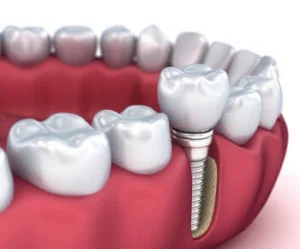 Bone loss can also develop around an implant that has already been placed. The most common cause is peri-implantitis, an inflammatory condition affecting the tissue and bone surrounding an implant. It is similar in nature to gum disease and can progress silently, without obvious symptoms in its early stages.
Plaque that accumulates around the implant site triggers an immune response that, if left untreated, gradually destroys the supporting bone. Risk factors include poor oral hygiene, smoking, poorly controlled diabetes, and a history of gum disease. Peri-implantitis and bone loss around implants are one of the more common complications that can affect implants over time, particularly when routine care and monitoring are not maintained.
Early detection makes a significant difference to how peri-implantitis can be managed. Signs worth discussing with your dentist include gum redness or swelling around the implant, bleeding when brushing near the site, an unusual taste or discharge, or any sense that the implant feels different. Regular check-ups are the most reliable way to catch these changes early.
Does Bone Loss Rule Out Dental Implants?
Not necessarily. Bone loss complicates implant placement in some cases, but it does not automatically exclude treatment. Several procedures exist to rebuild or augment bone volume before or during implant surgery.
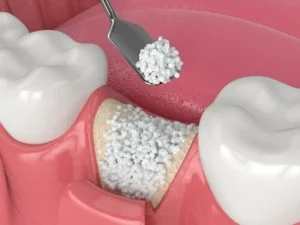
Bone grafting involves placing bone material at the implant site to increase volume and density. The material may come from the patient’s own body, a donor source, or a synthetic substitute. Once placed, the graft needs time to integrate with the natural bone before the implant can be placed.
Guided bone regeneration uses barrier membranes to create a protected space where new bone can form. The membrane prevents soft tissue from growing into the space too quickly, allowing the slower-forming bone cells to establish properly.
Sinus lift is a specific technique used when bone loss has occurred in the upper back jaw, where the sinus cavity sits close to the surface. The sinus membrane is gently lifted to create room for bone material, increasing the height available for an implant.
Bone grafting and sinus lift procedures offer clinically viable options for patients with compromised bone, with implant outcomes broadly comparable to those in patients with adequate native bone.
The most appropriate approach depends on how much bone has been lost, where the missing tooth was located, the overall health of the patient, and other individual factors. A comprehensive assessment using 3D imaging helps build a clear picture of what the bone looks like before any decisions are made.
What Affects How Much Bone Loss Occurs?
Bone loss is not a fixed or inevitable process. Several factors influence how quickly it progresses and how the bone responds when treatment is introduced.
Oral hygiene plays a central role both before and after implant treatment. Plaque accumulation around an implant site is a primary driver of peri-implantitis and the bone loss that follows. Good oral hygiene around implants is essential for preserving the tissue that supports any dental treatment, including implants.
Smoking significantly impairs blood flow to the gum and bone tissue, reducing the body’s ability to heal and maintain bone density. The effects are particularly notable during the period when bone is integrating around a new implant.
Gum disease, whether pre-existing or developing after implant placement, increases the risk of progressive bone loss. Conditions such as poorly controlled diabetes and certain medications that affect bone metabolism may also slow bone healing and complicate treatment.
The location of the missing tooth matters too. Upper back teeth sit closest to the sinus cavity, where bone tends to be thinner, and often require more preparatory work than other sites.
Taking the Next Step
 If you are concerned about bone loss, whether you have recently lost a tooth or have been missing one for some time, an assessment is the appropriate starting point. The amount of bone available, its quality, and what may be needed to support successful treatment can only be determined through a proper examination and imaging.
If you have questions or would like to understand your options, the team at Dental 266 is here to help. You can book an appointment online or call us on 02 9051 0600.
Note: Any surgical or invasive procedure carries risks. Before proceeding, you should seek a second opinion from an appropriately qualified health practitioner.
Frequently Asked Questions
How quickly does bone loss occur after a tooth is removed?
The most notable changes tend to occur in the first few months after extraction. Bone width can begin to reduce within the first three months, with further changes in height developing over the following months and years. The rate varies between individuals, depending on factors such as age, overall health, and oral hygiene. Acting sooner after tooth loss generally preserves more options for treatment.
Can bone loss around an implant be reversed?
In some cases, bone loss around an existing implant can be addressed through surgical or non-surgical treatment, depending on how much bone has been lost and how early the condition is detected. Bone grafting may be used to attempt regeneration of lost bone tissue in certain situations. Early detection through regular check-ups gives the best chance of managing the condition effectively.
References
Healthdirect Australia. (n.d.). ‘Dental implant’. Healthdirect Australia. Canberra, ACT: Australian Government. https://www.healthdirect.gov.au/dental-implant
Teeth.org.au. (n.d.). ‘Dental Implants’. Teeth.org.au. Australia: Australian and New Zealand Academy of Periodontists. https://www.teeth.org.au/dental-implants
Al-Bayati, S.A.A.F., Reddy, M.S., Rana, D., Srinivasan, D., Shanmugaavel, K.A., and Pradeep, C. (2025). ‘Bone Augmentation in Oral Implantology: A Systematic Review’. Journal of Pharmacy and Bioallied Sciences, 18 June. https://pmc.ncbi.nlm.nih.gov/articles/PMC12244590/
Better Health Channel. (n.d.). ‘Dental treatment’. Better Health Channel. Melbourne, VIC: Victorian Government Department of Health. https://www.betterhealth.vic.gov.au/health/conditionsandtreatments/dental-treatment