

Dental implant treatment unfolds over several months, and the healing that happens between each stage is just as important as the surgery itself. Understanding the dental implant healing stages helps you know what is normal, what to watch for, and how your choices during recovery may influence the overall outcome.
Most patients find the journey more predictable than they expected. Each stage has a clear purpose, and knowing what your body is doing at each point makes the process far easier to navigate. To learn more about dental implants in Burwood before starting your treatment, our team is happy to walk you through what is involved.
Quick Overview
- Dental implant healing stages refer to the distinct biological phases the body goes through after implant placement, from initial recovery through to final crown fitting.
- They apply to anyone who has had an implant placed, though the timeline and experience may vary based on individual health, bone quality, and whether preparatory procedures were involved.
- Each stage involves specific changes in the bone, gum tissue, and surrounding structures that determine whether the implant integrates successfully.
- How long healing takes at each stage can be influenced by lifestyle factors, systemic health, and how closely aftercare guidance is followed.
- What happens at one stage may affect the options available at the next.
Keep reading to understand each stage in detail, what affects the timeline, and what signs are worth discussing with your dentist.
Stage 1: The First Days After Implant Surgery
The hours and days immediately following dental implant surgery are your body’s initial response to the procedure. This is a normal inflammatory phase, not a sign that something is wrong.
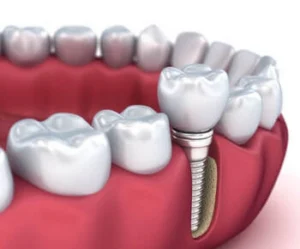 In the first 24 to 72 hours, you may experience mild swelling, minor bruising around the jaw or cheek, and some tenderness at the implant site. Minor bleeding in the first day is also common. More than one dental appointment is needed over several months, underscoring that implant treatment is a staged process designed to allow proper healing at each point.
Managing this phase well sets the foundation for everything that follows. Rest is important, as is following your dentist’s instructions about diet, hygiene, and medication. A soft food diet reduces pressure on the surgical site, and gentle salt water rinses from the day after surgery help keep the area clean without disturbing the healing tissue. Swelling typically peaks at around 48 to 72 hours and then begins to settle.
Prescribed pain relief or antibiotics should be taken exactly as directed. Completing a full course of antibiotics, if given, is important even when you begin feeling better.
Stage 2: Initial Soft Tissue Healing (Days 3 to 14)
Over the first two weeks, the gum tissue surrounding the implant site closes and begins to heal. This is the soft tissue healing phase, and while it is not visible, significant repair is happening beneath the surface.
The gum forms a seal around the titanium post during this period. Minor discomfort, some residual swelling, and sensitivity around the site are all normal. Most patients find day-to-day comfort improves noticeably by the end of the first week.
Oral hygiene during this stage requires care and intention. Continue brushing other teeth normally, but use a soft-bristled toothbrush very gently around the implant area. Avoid anything that places direct pressure on the surgical site, including crunchy foods, hard foods, and anything requiring significant chewing force near the implant. Hot drinks and foods can increase blood flow to the area and should be avoided in the early days.
Follow-up appointments during this stage allow your dentist to check that the gum tissue is healing as expected and that there are no early signs of concern.
Stage 3: Osseointegration, the Critical Bone Healing Phase
Osseointegration is the process by which the jawbone grows around and bonds directly to the titanium implant post. This is the longest of the dental implant healing stages and the one that determines whether the implant will function as a stable, lasting artificial tooth root.
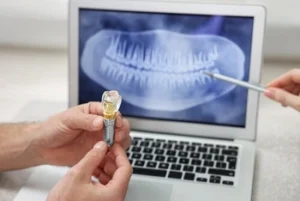 The term comes from the Latin “os” (bone) and “integrate” (to make whole). During this phase, bone cells attach to the surface of the titanium implant and gradually build new bone tissue around it. The implant shifts from being mechanically held in place to being biologically integrated with the jaw. This is what separates dental implants from other tooth replacement options: the implant itself becomes part of the jaw structure.
Osseointegration typically takes between three and six months, though this varies between patients. Titanium is a safe material that allows bone to grow around it, and implants generally carry high success rates when managed properly.
During this phase, it is important not to place undue stress on the implant. While you can eat soft foods and continue normal daily activities, the bone is still developing its bond. Avoiding very hard foods, protecting the site during physical activity, and maintaining good oral hygiene all support the process. Evidence on implant placement timing notes that matching the right protocol to the individual patient is a key factor in achieving reliable osseointegration.
Regular follow-up appointments during osseointegration allow your dentist to assess how integration is progressing before moving to the next stage.
Stage 4: Abutment Placement and Gum Shaping
Once osseointegration is confirmed, the next stage involves placing the abutment. The abutment is a small connector piece that attaches to the top of the implant post and links it to the final crown. Without it, the crown cannot be attached.
In some cases, the abutment is placed at the same appointment as the implant. More commonly, it is placed in a separate minor procedure once healing is confirmed. Your dentist will make a small opening in the gum tissue to access the top of the implant, attach the abutment, and then allow the gum to heal and shape itself around it.
This gum healing phase typically takes one to two weeks. During this time, you may notice some mild tenderness and minor swelling around the site, both of which are expected. The gum tissue gradually forms a natural-looking collar around the abutment, which provides the foundation for the final crown.
Good oral hygiene during abutment healing is particularly important. The gum tissue is sensitive, and keeping the area clean without being abrasive requires the same gentle approach used in the earlier healing stages.
Stage 5: Crown Placement and the Final Restoration
The final stage of the dental implant process is fitting the dental crown. Once the gum has healed around the abutment and your dentist confirms the implant is stable, impressions or digital scans of your teeth are taken. These are used to create a custom crown that matches the shape, size, and colour of your surrounding teeth.
The crown is then secured to the abutment, completing the restoration. At this point, the implant looks, functions, and is cared for in the same way as a natural tooth. Most patients describe the final result as feeling natural within a relatively short adjustment period.
In total, the dental implant treatment journey from initial placement to crown fitting commonly takes between four and nine months. The variation largely depends on how quickly osseointegration progresses and on individual healing rates.
What Factors Affect How Quickly Each Stage Heals?
 Several factors influence how efficiently the body heals at each point. Bone density and quality, overall health, certain medications, and oral hygiene all play a role. Smoking is particularly significant. Evidence on smoking and implant outcomes found that smokers face significantly higher rates of implant failure, with the effects most pronounced during osseointegration. The location of the implant also matters, as the upper jaw generally takes longer to heal than the lower jaw due to differences in bone density. Your dentist will review all relevant factors as part of your treatment planning.
Taking the Next Step
Whether you are planning your first consultation or are already midway through treatment, understanding the dental implant healing stages helps you make more informed decisions at each point. The timeline varies, but the biology is predictable, and good aftercare at every stage supports the best possible outcome.
If you have questions or would like to talk through your healing progress, the team at Dental 266 is here to help. You can book an appointment online or call us on 02 9051 0600.
Any surgical or invasive procedure carries risks. Before proceeding, you should seek a second opinion from an appropriately qualified health professional.
Frequently Asked Questions
Do I need bone grafting before dental implant surgery, and how does it affect the timeline?
Not everyone requires bone grafting. It is recommended when there is insufficient bone volume or density to support an implant securely. If you do need a graft, the material must integrate with your existing bone before the implant can be placed, which typically adds several months to the overall timeline. Your dentist will assess bone volume using imaging during the initial consultation and will discuss whether grafting is part of your treatment plan before any procedures begin.
Can I drink alcohol during the dental implant healing stages?
Alcohol is best avoided in the first week after any implant surgery. It can interfere with prescribed medications, including antibiotics, and may increase bleeding by thinning the blood. During the osseointegration phase, moderate alcohol consumption is unlikely to cause significant problems for most people, but heavy or regular drinking may affect bone healing and immune function. Your dentist can advise on what is appropriate for your specific situation and health history.
References
Healthdirect Australia. (n.d.). ‘Dental implant’. Healthdirect Australia. Canberra, ACT: Australian Government. https://www.healthdirect.gov.au/dental-implant
Better Health Channel. (n.d.). ‘Dental treatment’. Better Health Channel. Melbourne, VIC: Victorian Government Department of Health. https://www.betterhealth.vic.gov.au/health/conditionsandtreatments/dental-treatment
Stiller, H.L., Ionfrida, J., Kämmerer, P.W., and Walter, C. (2024). ‘The Effects of Smoking on Dental Implant Failure: A Current Literature Update’. Dentistry Journal, 29 September. Basel, Switzerland: MDPI. https://pmc.ncbi.nlm.nih.gov/articles/PMC11506801/
Vouros, I.D. (2025). ‘Optimizing Implant Placement Timing and Loading Protocols for Successful Functional and Esthetic Outcomes: A Narrative Literature Review’. Journal of Clinical Medicine, 21 February. Basel, Switzerland: MDPI. https://www.mdpi.com/2077-0383/14/5/1442