

When a tooth is damaged or lost, deciding on the right solution can feel complex. Many people find themselves weighing a dental implant vs crown without being fully clear on how each option works.
Both treatments aim to restore function and appearance, but they are used in different situations. The choice often depends on whether the issue involves damaged teeth, a missing or damaged tooth, or complete tooth loss.
This article outlines the key distinctions between a dental implant vs crown. It looks at structure, procedure, healing, and long-term impact on oral health. By comparing dental implants and crowns in practical terms, you can better understand which dental treatment may suit your situation.
What Are Dental Crowns?
Dental crowns are a commonly provided restorative solution intended to strengthen and shield teeth that have been weakened or damaged. When a damaged or decayed tooth cannot function properly on its own, a crown is placed over the entire tooth to restore shape and stability.
Dental crowns restore both structure and appearance. They are often used when decayed teeth or damaged teeth still have a healthy tooth’s root beneath the surface.
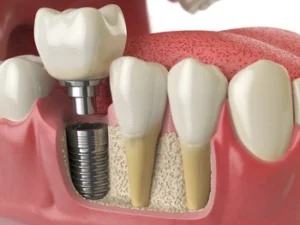 The crown placement process begins with shaping the existing teeth so the crown can fit securely. During crown placement, impressions are taken and forwarded to a dental laboratory where the final crown is constructed.
During the time required to complete the permanent crown, the prepared tooth is typically protected with a temporary crown. When the final crown returns from the laboratory, it is carefully positioned and refined to ensure proper fit and comfortable bite alignment.
Crowns restore the tooth’s shape and function without removing the natural tooth root. This makes them suitable for cases where the entire tooth structure is weakened but still present.
In some situations, dental veneers may be discussed for cosmetic concerns, but crowns are typically chosen when strength and structural coverage are required.
As a form of tooth restoration within restorative dentistry, dental crowns focus on protecting natural teeth and supporting dental health.
What Are Dental Implants?
Dental implants are used when a tooth is completely missing or cannot be preserved. Unlike crowns, which sit over an existing tooth, dental implants replace the natural tooth root.
During the dental implant procedure, a titanium post is placed into the jawbone to serve as a stable base. This surgical procedure allows the implant to act as an artificial replacement for the natural tooth root.
Over time, the titanium post integrates with the bone. This helps reduce bone loss that can occur after tooth loss.
Once integration is complete, a prosthetic tooth is attached. In many cases, this involves placing a dental implant crown on top of the implant. These implant crowns function as artificial teeth designed to restore chewing and appearance.
Dental implants provide support independently of surrounding teeth. They are frequently considered for replacing missing teeth when it is important to avoid altering adjacent teeth.
When discussing the advantages of dental implants, one key point is that they replace both the crown and the root of a tooth. This distinction is central when comparing dental implants and crowns.
Procedure, Healing, And Maintenance
The dental implant procedure includes a surgical phase followed by a period of healing. Implant surgery requires time for the bone to bond with the implant before the final restoration is secured in place.
The healing period for dental implants may differ based on bone condition and overall oral health. During this time, regular dental visits allow the dentist to monitor progress.
In contrast, the crown placement process is generally shorter. Crown placement typically does not require surgical placement, as it works with the existing tooth.
Both options require proper care after treatment. Good oral hygiene supports long-term stability of dental implants and crowns.
Regular dental check-ups help maintain dental health and identify any concerns early. Whether treatment occurs in a dental clinic for crown placement or implant surgery, follow-up care remains important.
Who Is A Suitable Candidate For Each Option?
Not every patient is equally suited to both a dental implant and a crown. The decision usually begins with a detailed assessment of the tooth, surrounding bone, and overall oral health.
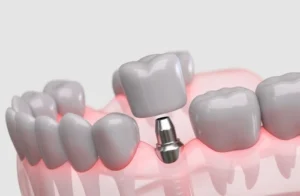 For a dental crown to be considered, the natural tooth root must remain stable. If enough healthy tooth structure is present to support a restoration, a crown may be used to reinforce and protect the tooth. In this situation, the goal is preservation rather than replacement.
If the tooth cannot be saved due to severe damage or infection, a dental implant may be discussed instead. An implant is generally considered when a tooth is missing entirely or cannot be restored in a predictable way.
Bone support is another important factor. While a crown relies on the existing tooth root, an implant depends on adequate bone for stability. The quality and volume of bone in the jaw are therefore assessed carefully before implant treatment is planned.
General health, smoking status, and oral hygiene habits may also influence treatment recommendations. Healing capacity and long-term stability are part of the overall evaluation.
Ultimately, suitability is determined by clinical findings. The condition of the tooth and supporting structures plays a greater role than personal preference alone.
Longevity And Future Replacement Considerations
When comparing a dental implant vs crown, it is helpful to consider how each option performs over time.
A dental crown protects the natural tooth underneath it. However, the underlying tooth remains biologically active. If decay develops at the margins or if the remaining structure weakens, the crown may eventually require replacement.
Dental implants function differently. The implant post replaces the tooth root and remains separate from natural tooth tissue. While the implant itself is designed for long-term stability, the visible crown attached to it may still need replacement after years of normal wear.
The difference lies in what each restoration depends on. A crown relies on the health of the natural tooth beneath it. An implant relies on the health of the surrounding gum and bone.
Long-term monitoring is important in both cases. Regular reviews help identify early signs of wear, gum inflammation, or structural changes.
Considering future replacement needs encourages realistic planning. It shifts attention from immediate restoration to how the chosen option will function over many years.
Risk Profile Differences Between A Crown And An Implant
When comparing a dental implant vs crown, it is also important to understand how the biological risk profile differs between the two options. Each treatment interacts with different tissues in the mouth.
A dental crown relies on the natural tooth root beneath it. If the underlying tooth remains strong and free from infection, a crown can function well for many years. However, because the natural tooth is still present, it remains vulnerable to issues such as recurrent decay at the margins or fracture of the remaining structure.
If decay develops under a crown, it may not be visible immediately. Regular dental check-ups help detect early changes before they affect the stability of the restoration. In some cases, damage to the tooth’s root can influence long-term outcomes.
Dental implants function differently. Instead of depending on a natural tooth root, they integrate with the surrounding bone. The risk profile is therefore centred around how the implant interacts with bone and soft tissue.
In rare cases, integration may not occur as expected. Inflammation around the implant site can also affect surrounding tissues if oral hygiene is not maintained carefully. Because implants are separate from natural tooth structure, they are not affected by tooth decay, but they do rely on healthy gums and bone support.
The key difference lies in what each treatment depends on biologically. A crown depends on the health of the natural tooth beneath it. An implant depends on the stability of bone and gum tissue around it.
Understanding these distinctions helps patients weigh dental implants and crowns not only in terms of procedure, but also in terms of how each option behaves within the body over time.
Emergency Situations And Immediate Decision-Making
While many treatment decisions are planned in advance, some situations require quicker consideration. A cracked tooth, dental trauma, or a failed root canal can change the discussion around a dental implant vs crown.
If a tooth is cracked but the natural tooth root remains intact, a crown may be used to stabilise the structure and restore function. In these cases, preserving the existing tooth is often prioritised.
When trauma leads to significant structural damage, the dentist assesses whether the remaining tooth can support a restoration. If enough healthy structure remains, crown placement may still be possible.
However, if the tooth cannot be saved due to a fracture extending below the gum line or severe infection, extraction may be required. In this situation, dental implants may be considered as a form of tooth replacement after healing.
A failed root canal can also influence treatment choice. If infection persists and the natural tooth root cannot be predictably preserved, replacing the tooth with an implant may be discussed.
Immediate decisions are based on clinical findings rather than preference alone. The condition of the tooth, surrounding bone, and overall oral health guide the recommendation.
By understanding how emergency scenarios affect treatment pathways, patients can approach urgent dental issues with clearer expectations and a better sense of how dental implants and crowns fit into different circumstances.
Functional And Lifestyle Considerations
Daily habits and lifestyle factors can also influence the choice between a dental implant and a crown.
 For patients who grind or clench their teeth, managing biting forces becomes important. A crown must absorb pressure while protecting the natural tooth beneath it. An implant crown transfers chewing forces through the implant into the bone.
Time commitment is another practical consideration. Crown treatment is typically completed in fewer visits. Implant treatment usually involves staged appointments and a healing period before the final crown is fitted.
Work schedules, comfort with surgical procedures, and personal priorities may all influence planning discussions.
While clinical suitability remains the primary factor, lifestyle considerations help ensure that treatment aligns with daily routines and expectations.
Cost, Insurance, And Practical Considerations
When comparing dental implants and crowns, cost can affect decision-making, but the lowest initial cost does not always reflect the full long-term picture.
A crown may involve a lower upfront cost in many cases because it restores an existing tooth. However, its long-term value depends on the continued health of the tooth underneath. If that tooth weakens over time, further treatment may still be needed.
A dental implant often involves a higher initial investment, but it is used when the tooth is missing or cannot be preserved. In that context, the cost reflects full replacement rather than protection of an existing tooth.
This means the comparison is not only about price, but about what each treatment is designed to do in the first place. Looking at cost in relation to the condition of the tooth, the expected lifespan of the restoration, and the likelihood of future treatment can support more realistic planning.
Insurance cover may also differ between treatment types, so checking what is included can help patients understand their likely out-of-pocket costs before proceeding.
Final Thoughts
Choosing between a dental implant vs crown depends on the condition of the tooth, the surrounding bone, and your long-term oral health goals. Crowns are typically used when a damaged tooth can still be supported by a healthy root, while dental implants are considered when a tooth is missing and needs full replacement from root to surface.
Each option has differences in structure, procedure, healing time, and maintenance. Understanding these differences allows for clearer decision-making based on function, stability, and long-term oral health considerations.
If you’re concerned about a damaged or missing tooth, or you want clearer guidance on whether a crown or dental implant may suit your situation, book a consultation with us at Dental 266 or call 02 9051 0600 to discuss your options.
Note: Any surgical or invasive procedure carries risks. Before proceeding, you should seek a second opinion from an appropriately qualified health practitioner.
Resources
“Valencia Higuera (2023). ‘Tooth Cavities’. Healthline, 18 May. San Francisco, CA: Healthline Media. https://www.healthline.com/find-care/articles/dentists/tooth-cavities”
“Cleveland Clinic Health Essentials (2024). ‘What To Do After Oral Surgery: Recovery and Self-Care’. Cleveland Clinic, 5 July. Cleveland, OH: Cleveland Clinic. https://health.clevelandclinic.org/post-op-recovery-oral-surgery”
“Healthdirect Australia (2025). ‘Dental Crown Procedure’. Healthdirect Australia, February 2025. Canberra, ACT: Australian Government Department of Health. https://www.healthdirect.gov.au/dental-crown-procedure”
“Mayo Clinic Staff (2024). ‘Dental Implant Surgery’. Mayo Clinic, 23 October. Rochester, MN: Mayo Foundation for Medical Education and Research. https://www.mayoclinic.org/tests-procedures/dental-implant-surgery/about/pac-20384622”
“Teeth.org.au (n.d.). ‘Cracked Teeth’. Teeth.org.au. Melbourne, VIC: Australian Dental Association. https://teeth.org.au/cracked-teeth”