
Losing a tooth can be unsettling, especially when it affects how you eat, speak or smile. Many people are surprised to learn that you do not need to lose all your teeth to benefit from dentures. If you have a few missing teeth but still have healthy natural teeth, a partial denture may be an effective alternative for restoring comfort, function and confidence.
Knowing what a partial denture is and how it functions can help you make informed choices about your oral health. This guide explains partial dentures in simple terms, including how they replace missing teeth, the different types available, how they are made, what they cost and how to care for them properly.
What Is a Partial Denture?
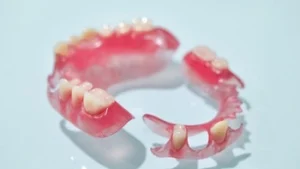 A partial denture is a dental device designed to replace one or more missing teeth when some natural teeth remain in the mouth. It is custom-made to fit around existing teeth and fill the gap left by tooth loss. Partial dentures fill the spaces created by a few missing teeth while helping maintain the position of the remaining teeth.
Unlike full dentures, which replace an entire upper or lower jaw of teeth, partial dentures are used when only a few teeth are missing. They can be fitted to the upper or lower jaw and are designed to blend with your natural smile using artificial teeth shaped and coloured to match surrounding teeth.
Partial dentures are removable or fixed, depending on the design and your individual dental needs. They support chewing, speech and appearance while also helping protect oral health by preventing other teeth from shifting out of place.
Why Replacing Missing Teeth Matters
Missing teeth can affect more than just your appearance. When a gap is left untreated, surrounding teeth may move toward the empty space. This can place pressure on adjacent teeth, affect your bite and increase the risk of dental issues over time.
Tooth loss can also impact the bone structure of the jaw. Without replacement teeth to stimulate the bone, gradual bone loss may occur, particularly in the lower jaw. This can change facial shape and make future tooth replacement more complex.
Replacing missing teeth helps protect remaining teeth, supports gums and promotes long-term oral health. Partial dentures provide a practical way to restore everyday function while preserving healthy natural teeth.
Who May Benefit From Partial Dentures?
Partial dentures may be a suitable option for people who have some missing teeth but still have healthy natural teeth. They are commonly recommended in the following situations:
- You have a few missing teeth and want to restore chewing and speech
- Your remaining teeth are healthy and can support a dental appliance
- Gaps from tooth loss are affecting comfort, bite or appearance
- You want to prevent surrounding teeth from shifting into empty spaces
- You prefer a removable option rather than a fixed bridge
- Dental implants are not suitable or are being delayed
- You need a solution for the upper or lower jaw without removing healthy teeth
- You want to support long-term oral health and protect existing teeth
A dentist can assess your mouth, gums and remaining teeth to confirm whether partial dentures are the right choice for your needs and lifestyle.
How Partial Dentures Work
Partial dentures work by attaching to existing teeth or resting gently on the gums. They hold artificial teeth in place and help distribute biting forces across the mouth. This reduces strain on surrounding teeth and supports a balanced bite.
Depending on the design, partial dentures may use metal clasps, precision attachments or acrylic clasps to stay secure. Some designs rely on a metal framework, while others are made from flexible materials that adapt comfortably to the mouth.
Each partial denture is carefully designed so it fits comfortably alongside other teeth and restores natural function.
Types of Partial Dentures Explained Simply
There are multiple types of partial dentures, each designed to suit different needs, preferences and mouth structures. Understanding the options can help you feel more confident when discussing treatment with your dentist.
 Removable Partial Dentures
 Removable Partial Dentures
Removable partial dentures are the most widely used option. They can be taken out for cleaning and while sleeping. These dentures typically consist of artificial teeth attached to a metal framework or acrylic base that rests on the gums.
Metal clasps are often used to hold the denture in place by attaching to existing teeth. While visible in some cases, they provide strong support and durability.
Flexible Partial Dentures
Flexible partial dentures are made from a softer, gum coloured material. They do not use metal clasps and instead rely on flexible dentures that gently grip surrounding teeth.
These dentures are often lighter and more comfortable for some patients, particularly those sensitive to metal. Flexible partial dentures may be a suitable option for replacing front teeth, as they are designed to blend more naturally with the surrounding teeth and gums.
Metal Dentures
Metal dentures use a metal framework that offers strength and longevity. They are thinner than acrylic options and tend to feel more stable during chewing.
Although metal clasps may be visible, metal dentures are known for their durability and precise fit. Many people choose this option for long-term use.
Fixed Partial Denture
A fixed partial denture is not removable by the wearer. It is often referred to as a fixed bridge. This type of dental appliance uses dental crowns placed on adjacent teeth to support replacement teeth in between.
A fixed bridge requires two crowns placed on surrounding teeth, sometimes described as two crowns supporting a replacement tooth. This option provides stability but requires reshaping healthy teeth, which may not be suitable for everyone.
Partial Dentures Versus Other Tooth Replacement Options
Partial dentures are just one of several ways to replace missing teeth. Other options include dental implants and fixed bridges. Each approach has benefits and considerations.
Dental implants involve inserting a titanium post into the jawbone, which acts as a stable base for a replacement tooth. They offer excellent stability but may not be suitable for everyone due to cost, healing time or bone availability.
A fixed bridge uses adjacent teeth for support, which may involve removing healthy tooth structure. Partial dentures provide an effective alternative for people who prefer a less invasive option.
Choosing the right solution depends on oral health, lifestyle, budget and personal preferences.
What Are Partial Dentures Made Of?
Making dentures involves carefully selecting materials that balance comfort, strength and appearance. Partial dentures may include:
- Artificial teeth made from acrylic or porcelain
- A metal framework for strength and stability
- Acrylic clasps or metal clasps for retention
- Precision attachments for a discreet fit
Each component is designed to work together to restore function and blend naturally with your mouth.
The Process of Getting Partial Dentures
The denture-making process typically includes several stages to achieve a comfortable fit and accurate results.
Initial Consultation
Your dentist will examine your mouth, gums, existing teeth and lower teeth or upper teeth as needed. Impressions are taken to capture the shape of your mouth and bite.
Design and Fitting
The denture is designed to suit your mouth and the position of other teeth. A trial fitting may be used to check comfort, appearance and function before the final denture is completed.
Final Placement
Once adjustments are made, the finished denture is fitted. Your dentist will provide guidance on wearing, cleaning and adapting to your new dental appliance.
Adjusting to Life With Partial Dentures
It is common to go through an adjustment phase when first wearing partial dentures, as the mouth needs time to adapt to the new appliance.
During the early stages, soft foods are often recommended. This helps reduce pressure while learning to chew evenly. Speaking may also feel different at first, but it improves with practice.
Saliva flow may increase initially, and some people experience dry mouth as the mouth adjusts. These changes usually settle over time.
Caring for Partial Dentures Properly
Proper care is essential for comfort, durability and oral health. Good habits help prevent irritation, gum problems and damage to the denture.
Daily care includes:
- Removing and cleaning the denture each day
- Brushing remaining teeth and gums gently
- Using denture adhesive only if recommended
Regular dental check-ups help your dentist assess the fit of your denture and monitor the health of your gums and existing teeth.
Partial Dentures Cost and What Influences Pricing
Partial dentures cost varies depending on several factors. These include the type of denture, materials used, number of replacement teeth and complexity of the design.
The cost of partial dentures may be influenced by:
- Metal framework versus flexible dentures
- Precision attachments versus metal clasps
- Upper or lower jaw placement
- Number of missing teeth or gaps created
Payment plans are often available to help manage treatment costs. Your dentist can provide a personalised estimate based on your needs.
Common Concerns About Partial Dentures
Many people have questions before choosing partial dentures. Addressing concerns early can ease anxiety and improve outcomes.
Some worry about comfort or appearance. Modern dentures are designed to look natural and feel comfortable when fitted correctly.
Others ask about durability. With proper care, partial dentures can last many years, although adjustments may be needed as the mouth changes.
Can Partial Dentures Protect Remaining Teeth?
Yes. Partial dentures help stabilise remaining teeth by preventing movement into gaps. This supports bite alignment and reduces strain on other teeth.
They also help distribute chewing forces more evenly, protecting surrounding teeth and gums from excessive pressure.
Partial Dentures and Long-Term Oral Health
Maintaining oral health while wearing partial dentures requires ongoing care. Plaque can build up around clasps and existing teeth if cleaning is neglected.
Good hygiene, regular dental visits and proper care help prevent decay, gum disease and further tooth loss.
Partial dentures play an important role in preserving mouth function and comfort when used correctly.
Are Partial Dentures Right for You?
Partial dentures may be right for you if you have a few missing teeth, want a removable partial option and prefer a practical solution that supports natural teeth.
They offer flexibility, affordability and effectiveness for many people. A dentist can help determine whether partial dentures or another option best suits your mouth and lifestyle.
How Partial Dentures Affect Speech and Eating
 When partial dentures are first fitted, some temporary changes in speech and eating are common, as the tongue, lips and cheeks need time to adjust to the new dental appliance. Certain sounds, particularly those involving the tongue and front teeth, may feel different at first. With regular wear and gentle practice, speech clarity usually improves as the mouth adjusts.
Eating may also feel unfamiliar in the early stages. Chewing efficiency can be reduced initially as bite coordination adjusts to the new balance between natural teeth and replacement teeth. Starting with soft foods and chewing slowly on both sides of the mouth can help improve comfort and control. Over time, partial dentures support more even biting and allow many people to return to a wider range of foods with greater confidence.
Emotional and Lifestyle Benefits of Replacing Missing Teeth
Replacing missing teeth can have a meaningful impact on everyday life beyond physical function. Many people feel more at ease smiling, speaking and interacting socially once visible gaps are filled. This can lead to improved confidence in both personal and professional settings.
Partial dentures can also ease self-consciousness when eating in public or talking closely with others. Feeling comfortable with your smile often supports a more relaxed approach to daily activities, from social gatherings to work conversations. Restoring gaps can help people feel more like themselves again, supporting overall well-being and quality of life.
Signs Your Partial Denture Needs Adjustment
Even well-fitted partial dentures may need adjustment over time as the mouth naturally changes. Noticing early warning signs can help reduce discomfort and support ongoing oral health.
Signs that your partial denture may need adjustment include soreness or irritation on the gums, pressure on adjacent teeth or areas that feel tender after wearing the denture. Movement while eating or speaking can indicate changes in fit, while clicking sounds or shifts in bite alignment may suggest uneven contact with other teeth.
You may also notice changes in comfort, difficulty chewing certain foods or areas where food becomes trapped more easily. If any of these issues arise, visiting a dentist for assessment and adjustment can help restore comfort and maintain the long-term fit and effectiveness of the partial denture.
Final Thoughts on Partial Dentures
Understanding what a partial denture is allows you to make confident decisions about tooth replacement. Partial dentures provide a reliable way to replace missing teeth, protect remaining teeth and support long-term oral health.
With the right design, proper care and professional guidance, partial dentures can restore comfort, function and confidence for many denture wearers. If you are experiencing tooth loss or gaps in your smile, booking a consultation with our dental team at Dental 266 can help you explore whether partial dentures are the right option for your needs. To arrange an appointment or speak with our team, call 02 9051 0600 for personalised advice and professional care.
Note: Any surgical or invasive procedure carries risks. Before proceeding, you should seek a second opinion from an appropriately qualified health practitioner.
References
Gomes, S. G. F., Custodio, W., Faot, F., & Garcia, R. C. M. R. (2011). Chewing side, bite force symmetry, and occlusal contact area of subjects with different facial vertical patterns. Retrieved from https://www.researchgate.net/publication/307787421_Chewing_side_bite_force_symmetry_and_occlusal_contact_area_of_subjects_with_different_facial_vertical_patterns
Cleveland Clinic. (n.d.). Dental impressions. Retrieved from https://my.clevelandclinic.org/health/diagnostics/22671-dental-impressions
Mayo Clinic. (n.d.). Dental implant surgery. Retrieved from https://www.mayoclinic.org/tests-procedures/dental-implant-surgery/about/pac-20384622
National Center for Biotechnology Information. (2013). Article Title. Journal Name, Volume(Issue), page numbers. Retrieved from https://pmc.ncbi.nlm.nih.gov/articles/PMC3843478/
Polident. (n.d.). Types of partial dentures and which is right for me. Retrieved from https://www.polident.com/en-us/Partials/getting-partials/types-of-partial-dentures-and-which-is-right-for-me/