
Losing many teeth can change how a person eats, speaks, and feels about their smile. When several teeth are no longer working well, everyday tasks can become more difficult. In some situations, dental implants are discussed as a way to provide stable support within the jawbone.
Full-arch dental implants are one approach used to support a complete set of replacement teeth. This guide explains how full arch treatment works, who it may suit, and what to expect from planning through healing and long-term care.
The aim is to provide clear information so you can understand how this form of tooth replacement may fit into your overall oral health plan.
Understanding Full Arch Treatment
Full-arch treatment is designed for people who have lost multiple teeth within the same dental arch. Instead of replacing each tooth individually, the approach supports a full arch of new teeth using a fixed structure.
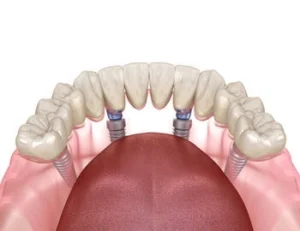 Full-arch dental implants anchor a full arch of replacement teeth to implants placed in the jaw. You may also hear the term arch dental implants when describing this type of care. Each term refers to supporting an entire dental arch rather than a single tooth.
This option is often considered when missing teeth affect chewing, speech, and comfort. In some cases, remaining teeth may no longer be strong enough to support function on their own.
Full-arch treatment is a form of tooth replacement that aims to provide a stable and long-term structure. While it is sometimes described as a permanent solution, long-term success still depends on careful planning and ongoing oral health care.
The goal is to restore function across the whole dental arch so the person has a consistent bite and balanced appearance.
How Implants Support A Full-Arch
Dental implants are small fixtures placed into the jawbone to act as anchors. Implants are positioned in carefully selected implant sites so they can support a full-arch securely.
In full arch implants, the implants are spaced along the dental arch to distribute pressure evenly. Arch implants and full arch implants rely on this spread to support chewing forces across the structure rather than concentrating them in one area.
During implant placement, attention is given to bone density and the condition of the jawbone. Strong bone helps implants integrate with the surrounding tissue. This integration process allows implants to bond gradually with the jawbone.
As implants integrate, blood vessels and healthy blood flow in the area support healing. These biological factors play a role in how new implants settle into place.
In some treatment designs, four implants may be used to support a full arch. The number and position depend on bone density, the shape of the jawbone, and overall planning.
Dental implants in this setting do not function alone. Instead, implants work together to carry the load of full arch replacement teeth across the dental arch.
Who May Be Suitable For Full Arch Implants
An initial consultation allows the dentist to review your oral health and discuss goals. A thorough examination is carried out to assess the condition of the remaining teeth, jawbone, and gums.
Your medical history is also considered, as general health can influence healing and the long-term stability of dental implants.
Gum disease may need to be managed before implant placement. Bone loss is another factor that can influence planning, as sufficient jawbone helps implants remain stable.
In some cases, retaining natural teeth may be possible. In others, removing weakened remaining teeth may create a more balanced foundation for a full arch approach.
Planning also considers whether placing too many dental implants would add complexity without a clear benefit. Careful assessment helps determine how implants can best support long-term oral health.
Surgical Considerations And Safety
Full-arch treatment involves a surgical or invasive procedure. As with any invasive procedure, careful planning and clear discussion are important.
The dentist explains the steps involved in implant placement and how implants will support the final structure. Sedation options may be discussed to help manage comfort during the procedure.
For some patients, IV sedation is considered. Decisions about sedation options are based on medical history, overall health, and personal comfort.
Understanding that a surgical or invasive procedure carries risks allows patients to make informed decisions about treatment.
The Healing Process And Integration
 After implant placement, the healing process begins. During this phase, implants integrate gradually with the jawbone.
Blood flow around the implant sites supports tissue repair. As implants integrate, stability increases over time.
New implants require a period of healing before the final prosthesis is attached. The length of the healing process depends on bone density, overall health, and the body’s response.
Care during this stage supports the long-term function of the implants and helps maintain overall oral health.
The Final Prosthesis And Function
Once healing is complete, the final prosthesis is attached to the implants. This structure holds prosthetic teeth designed to restore appearance and function.
The final prosthesis connects securely to the implants, forming a full arch of replacement teeth. These replacement teeth are shaped to support clear speech and effective chewing.
Many people describe the result as having functional teeth again. New teeth supported by implants are designed to remain stable during daily activities.
In contrast to replacing each tooth individually with individual implants, full-arch treatment supports multiple teeth as a single unit. This structure allows the dental arch to function as a coordinated whole.
Living With Full Arch Implants
Full-arch implants are intended to support everyday activities, including enjoying favourite foods. While certain habits may need adjustment during healing, most people return to a varied diet once stability is achieved.
Maintaining oral health remains important. Even though the replacement teeth are artificial, the surrounding gums and jawbone still require care.
Traditional dentures may move during speech or eating, whereas full-arch implants are fixed in place. This difference can influence comfort and confidence in daily life.
Regular reviews with a dentist help monitor the implants, replacement teeth, and jaw bone. Ongoing care supports the long-term function of the full-arch and helps protect the remaining natural teeth in the opposite arch, if present.
Full-arch dental implants provide one structured approach to managing extensive tooth loss. When carefully planned and maintained, they can support stable, coordinated function across the entire dental arch.
Final Thoughts On Full Arch Dental Implants
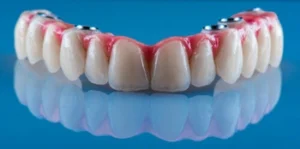 Full arch dental implants offer a structured approach to replacing most or all teeth within one dental arch. The focus is on restoring coordinated function, supporting stability within the jawbone, and creating a balanced bite across the full arch.
When carefully planned and maintained, this form of tooth replacement can help improve chewing, speech, and day-to-day comfort. As with any surgical or invasive procedure, assessment, healing, and ongoing care all play an important role in long-term outcomes.
If you’re concerned about extensive tooth loss or want a stable, structured approach to restoring function across a full arch, you can book a consultation with us at Dental 266 or call 02 9051 0600 to discuss your options.
Note: Any surgical or invasive procedure carries risks. Before proceeding, you should seek a second opinion from an appropriately qualified health practitioner.
Resources
“Colgate (2023). ‘What Is Good Oral Hygiene?’. Colgate, 9 January. New York, NY: Colgate-Palmolive Company. https://www.colgate.com/en-us/oral-health/adult-oral-care/what-is-good-oral-hygiene”
“Cleveland Clinic (2025). ‘Sedation Dentistry’. Cleveland Clinic, 5 August. Cleveland, OH: Cleveland Clinic. https://my.clevelandclinic.org/health/treatments/22275-sedation-dentistry”
“Mayo Clinic Staff (2024). ‘Dental Implant Surgery’. Mayo Clinic, 23 October. Rochester, MN: Mayo Foundation for Medical Education and Research. https://www.mayoclinic.org/tests-procedures/dental-implant-surgery/about/pac-20384622”